
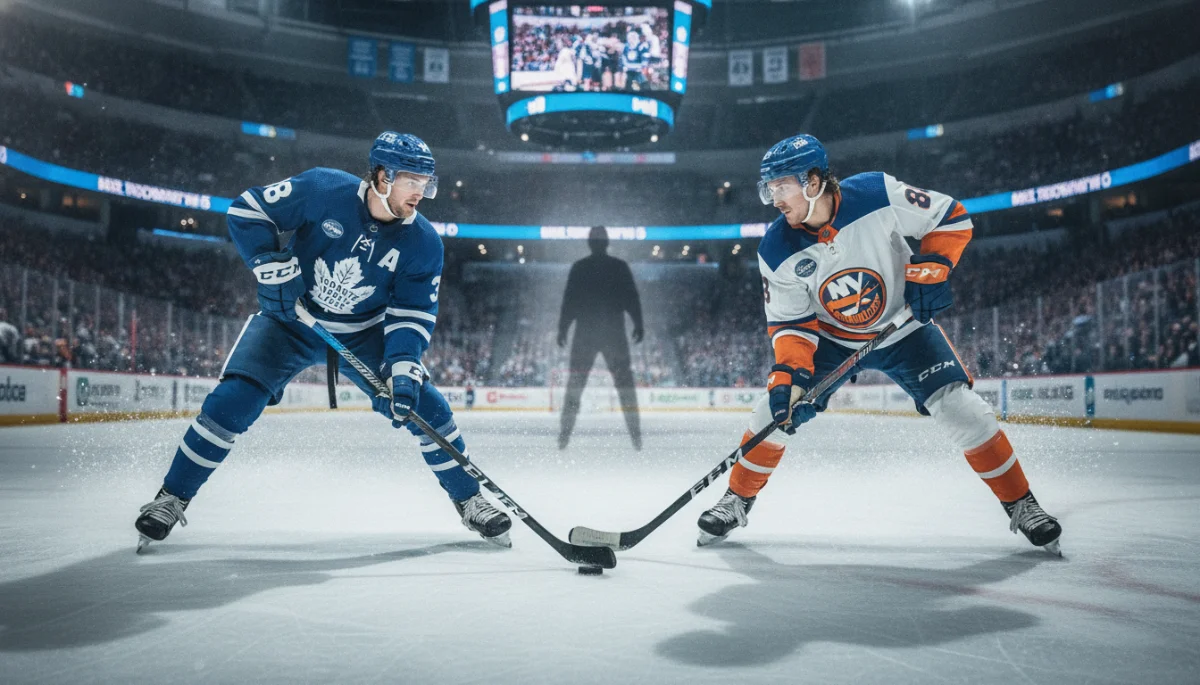
Toronto’s next home game brings together two of the NHL’s most closely watched young talents, but the broader matchup could be just as compelling. The Maple Leafs will host the New York Islanders at 7 p.m. ET on Saturday, October 17, with both clubs looking to build momentum early in the season.
The spotlight will naturally fall on Gavin McKenna and Matthew Schaefer. McKenna became the first selection in the 2026 NHL Draft, while Schaefer earned that distinction a year earlier. Their second NHL meeting gives fans another chance to compare two players expected to shape the league’s future.
Toronto also has an immediate superstar in Auston Matthews, and New York has already shown that it can frustrate the Leafs. The Islanders won the teams’ first meeting 2-1, making Saturday’s game more than a show of young talent. It is also an opportunity for Toronto to respond.
Two Top Picks Meet in a Very Different Setting
McKenna and Schaefer already know what the other can bring. During the previous matchup, neither player registered a point, but their individual assignments remained noticeable throughout the game.
McKenna played 15:32 and managed one shot on goal. Schaefer recorded three shots and frequently found himself defending against Toronto’s prized rookie. The Islanders ultimately protected their narrow lead, leaving both first-overall selections without a point on the scoresheet.
The rematch could unfold differently because McKenna has begun to settle into the NHL. More comfort with the pace, tighter defensive coverage and heavier physical play should allow him to make quicker decisions with the puck.
Schaefer, meanwhile, has already earned the responsibility of facing elite opponents. His role is not limited to watching McKenna; he must also help control Toronto’s top line, move the puck efficiently and support the Islanders’ transition game.
McKenna’s Early Adjustment Is Moving Quickly
McKenna’s first few games offered little statistical evidence of his offensive ability. He went scoreless in his opening three contests, a normal challenge for an 18-year-old entering the fastest league in professional hockey.
His response was immediate. McKenna followed that quiet beginning with points in three straight games, collecting one goal and three assists during the run. He scored his first NHL goal against the Nashville Predators, then added assists in games against Vegas and Colorado.
That stretch suggests that the rookie is learning how to create offense without forcing every opportunity. He is seeing passing lanes earlier, using his speed more efficiently and showing greater confidence when defenders close in.
His first NHL goal also came with help from Matthews, who assisted on the play. That connection could become increasingly valuable for Toronto, especially if opponents begin giving Matthews extra attention whenever McKenna joins the attack.
Saturday’s game presents a demanding test. New York has already limited McKenna once, and Schaefer may receive another extended assignment against him. A productive night in that environment would provide a strong indication of McKenna’s progress.
Schaefer Has Become Essential to the Islanders
New York’s young defenseman enters the rematch with a level of responsibility that most players his age rarely receive. Schaefer is not merely developing at the NHL level; he is already one of the Islanders’ most relied-upon players.
He began the season as the reigning Calder Trophy winner after an extraordinary rookie campaign. Schaefer produced 59 points and 23 goals last season, setting an NHL record for points by an 18-year-old defenseman. His goal total also matched the league record for a rookie defenseman in a single season.
The Islanders have continued to use him in every important situation. Before Saturday’s game, Schaefer had four assists and was averaging more than 25 minutes per night, the highest average on New York’s roster.
Those minutes could put him directly in the path of Toronto’s most dangerous players. Schaefer’s skating allows him to close gaps quickly, while his puck movement can turn a defensive stop into an attacking chance within seconds.
His challenge will be balancing aggression with discipline. If he steps forward at the wrong moment, Toronto’s forwards can attack the space behind him. If he plays too cautiously, the Leafs may control the puck and establish sustained pressure.
Matthews Changes the Calculation for New York
Even with McKenna and Schaefer receiving much of the attention, Matthews remains the central problem for the Islanders. Toronto’s captain can threaten from distance, attack the slot and create scoring opportunities when defenders lose sight of him for only a moment.
New York cannot devote every shift to the rookie matchup. If the Islanders overcommit to McKenna, Matthews may gain the time and space needed to take over. If they concentrate too heavily on Matthews, McKenna and Toronto’s other forwards may find more room to operate.
Matthews also brings a leadership connection to McKenna’s introduction to the league. His assist on the rookie’s first goal showed how quickly the two can influence the same possession, and his willingness to support McKenna adds another layer to Toronto’s attack.
For the Islanders, the answer will require coordinated coverage rather than one defender trying to solve every problem alone. Schaefer may handle difficult assignments, but New York’s forwards and other defensemen must also limit passing lanes and prevent clean entries.
The Tactical Route to a Toronto Response
The Maple Leafs need a stronger opening than they produced in the first meeting. Establishing pressure early could force New York to defend for extended stretches instead of allowing the Islanders to dictate the pace.
Toronto will also need to avoid turning every possession into a rush chance. The Islanders are capable of using an open game against their opponents, but they may be more comfortable if the contest becomes structured and physical. Controlled entries, quick puck movement and support below the puck should help the Leafs maintain possession.
New York’s preferred approach is likely to emphasize defensive layers and efficient counterattacks. The Islanders succeeded in keeping Toronto’s offense to one goal in the earlier game, and another disciplined performance would give their goaltender a chance to make the difference.
Goaltending could become especially important if the teams trade chances late. Both lineups contain enough skill to create dangerous looks in short bursts, so one difficult save or one rebound allowed could decide the result.
Special teams provide another possible turning point. A single unnecessary penalty may give either Matthews or McKenna the space needed to change the game. Toronto will want its power play to create consistent pressure, while New York must avoid giving the Leafs repeated opportunities.
Players Who Could Define Saturday Night
Gavin McKenna
McKenna enters the contest with growing belief after his three-game point streak. His combination of acceleration, imagination and improving composure makes him one of Toronto’s most intriguing offensive options. The way he handles Schaefer’s coverage could reveal how rapidly he is adapting.
Matthew Schaefer
Schaefer’s workload makes him a central figure on both sides of the puck. He must defend Toronto’s skilled forwards, contribute to the Islanders’ breakout and take advantage of offensive opportunities when they appear. His ability to manage those responsibilities will be tested throughout the game.
Auston Matthews
Matthews remains the player New York cannot ignore. He can score without much space, draw defenders away from teammates and create a decisive shift with one strong possession. If the Islanders lose track of him near the net, the game may change quickly.
A Rematch With More Than Rookie Intrigue
Toronto has a clear incentive to make this meeting different from the last one. The Islanders already proved that they can hold the Leafs to limited production and win a close game, so the home team must find ways to generate more sustained offense.
McKenna’s recent scoring run gives Toronto another attacking option, but his development will not remove the pressure on Matthews. Instead, it may force New York to divide its defensive attention among several major threats.
For the Islanders, the formula is familiar: remain compact, limit dangerous chances and use Schaefer’s all-around game to transition quickly. If they can keep the contest controlled, they have a strong chance to make Toronto work for every scoring opportunity.
The game’s headline may belong to the latest meeting between the NHL’s two most recent first-overall selections. The result, however, could depend on Toronto’s ability to combine McKenna’s emerging creativity with Matthews’ established finishing skill.
Puck drop is scheduled for 7 p.m. ET on Saturday, October 17, when the New York Islanders visit the Toronto Maple Leafs.