
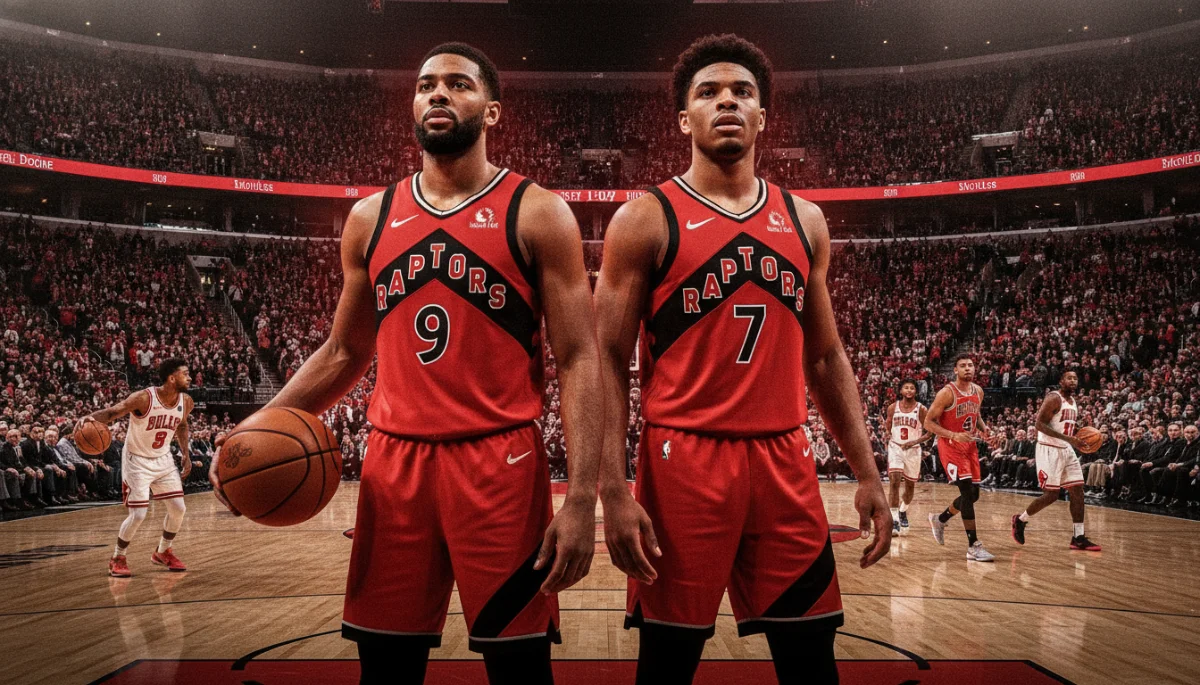
The Toronto Raptors open the 2026–27 NBA season at home against the Chicago Bulls on Wednesday, October 21. Tipoff is scheduled for 7:30 p.m. ET at Scotiabank Arena, where Toronto will unveil a revamped lineup led by the return of Kawhi Leonard.
Leonard’s presence immediately raises expectations, but this matchup is also an important early test for Scottie Barnes, RJ Barrett, Immanuel Quickley, and the rest of the Raptors’ developing core. Toronto is not simply chasing an opening-night win; it is beginning a season with legitimate hopes of becoming a difficult playoff opponent in the Eastern Conference.
Why This Season Opener Matters for Toronto
The Raptors enter the game with momentum from a playoff season in which they finished fifth in the East with a 46–36 record. Their campaign ended after a competitive seven-game series against Cleveland, but the experience gave the roster a stronger foundation heading into the new season.
Adding Leonard changes the ceiling of the team. The veteran forward returns to the city where he became a franchise icon by guiding Toronto to its first championship in 2019. His decisive shot against Philadelphia remains one of the most memorable moments in Raptors history, and his second chapter in Toronto will attract attention from the opening possession.
The game also gives Toronto an opportunity to show whether its established players can blend naturally with its returning star. Leonard offers efficient scoring, physical defense, calm decision-making, and considerable postseason experience. The challenge will be managing his workload while building rhythm with a group that already has clear ambitions.
Leonard and Barnes Form Toronto’s Central Partnership
Leonard may be the headline name, but Barnes remains the player most closely tied to Toronto’s long-term direction. Last season, Barnes averaged 18.1 points, 7.5 rebounds, and 5.9 assists per game, demonstrating how much responsibility he can handle as a scorer, passer, rebounder, and defensive playmaker.
He also earned recognition on the NBA All-Defensive Second Team, reflecting his growing influence on that end of the floor. Barnes can guard several positions, push the ball in transition, and create offense without needing every possession designed around him.
That versatility should make him a natural complement to Leonard. Both forwards can initiate plays, defend opposing stars, and contribute away from the ball. If Barnes attacks open space while Leonard operates in isolation or from the mid-post, Toronto could make Chicago defend multiple threats on every possession.
Leonard’s offensive production will be another major storyline. He averaged 27.9 points, 6.4 rebounds, and 3.6 assists last season while shooting 50.5% from the field and 38.7% from three-point range. Those numbers illustrate why his availability and efficiency could have an immediate effect on Toronto’s offense.
Chicago’s Young Group Faces an Early Challenge
The Bulls arrive with a different set of priorities. After missing the playoffs for four straight seasons, Chicago is focused on developing younger players and identifying the pieces that can form its next competitive roster.
Josh Giddey, Matas Buzelis, and rookie Caleb Wilson are among the players expected to draw attention. Their talent gives Chicago reasons for optimism, but the team is still working toward greater consistency in its defensive rotations, half-court execution, and late-game decision-making.
That makes Toronto an especially demanding opening opponent. The Raptors possess more proven two-way talent, a familiar home environment, and a defensive identity that ranked among the league’s top five last season. Chicago will need to keep the game fast, move the ball effectively, and avoid allowing Toronto’s bigger wings to control every matchup.
Still, an opening-night contest can produce surprises. New lineups often create uneven stretches, and a young team can benefit from playing aggressively before the favorite settles into its preferred rhythm. If Chicago forces turnovers and converts in transition, it can make the game uncomfortable for Toronto.
The Matchup Areas That Could Shape the Result
Toronto’s half-court scoring
The Raptors should have an advantage when possessions slow down. Leonard can manufacture a shot late in the clock, while Barnes, Barrett, and Quickley provide additional ways to attack. Toronto will need to avoid relying too heavily on difficult individual attempts and instead use cuts, screens, and quick passes to keep Chicago’s defense moving.
Wing defense and transition control
Toronto’s strongest defensive combinations could feature Leonard and Barnes handling difficult assignments across the perimeter. Their ability to switch, contest drives, and recover to shooters may limit Chicago’s best offensive options.
The Bulls’ clearest path to an upset could come in transition. Toronto must sprint back after missed shots, protect the ball, and force Chicago to score against a set defense. Careless turnovers would give the younger visitors exactly the kind of open-floor chances they need.
Rebounding around Jakob Poeltl
Control of the glass could decide how many possessions each team receives. Jakob Poeltl will be important in protecting the rim and completing defensive possessions, while Barnes must use his size and athleticism to help secure rebounds outside the center position.
Toronto experienced inconsistent stretches on the boards during the preseason. Giving Chicago second chances would erase much of the Raptors’ talent advantage, especially if the Bulls gain confidence from extra offensive possessions.
Prediction: Toronto Has the More Complete Opening-Night Formula
Toronto enters the matchup as the stronger team on paper. The Raptors have home-court advantage, a more experienced core, and a defensive foundation that can pressure Chicago in several ways. Leonard’s two-way impact gives them another high-level option in close moments.
Chicago’s youth and pace could create problems, particularly if the Bulls force Toronto into rushed decisions. However, the Raptors should be able to answer with superior wing defense, more reliable half-court scoring, and greater composure in the final minutes.
The key question is not whether Leonard can produce individually. It is whether he and Barnes can establish an efficient partnership from the start. If they share the ball, defend with discipline, and receive reliable support from Barrett, Quickley, and Poeltl, Toronto should have a strong chance to begin the season with a victory.
For Raptors fans, the opener represents more than the first game on the schedule. It is the first meaningful look at a team that combines championship experience with emerging talent. A convincing performance against Chicago would not settle every question, but it would offer an encouraging first sign of what Toronto could become.