
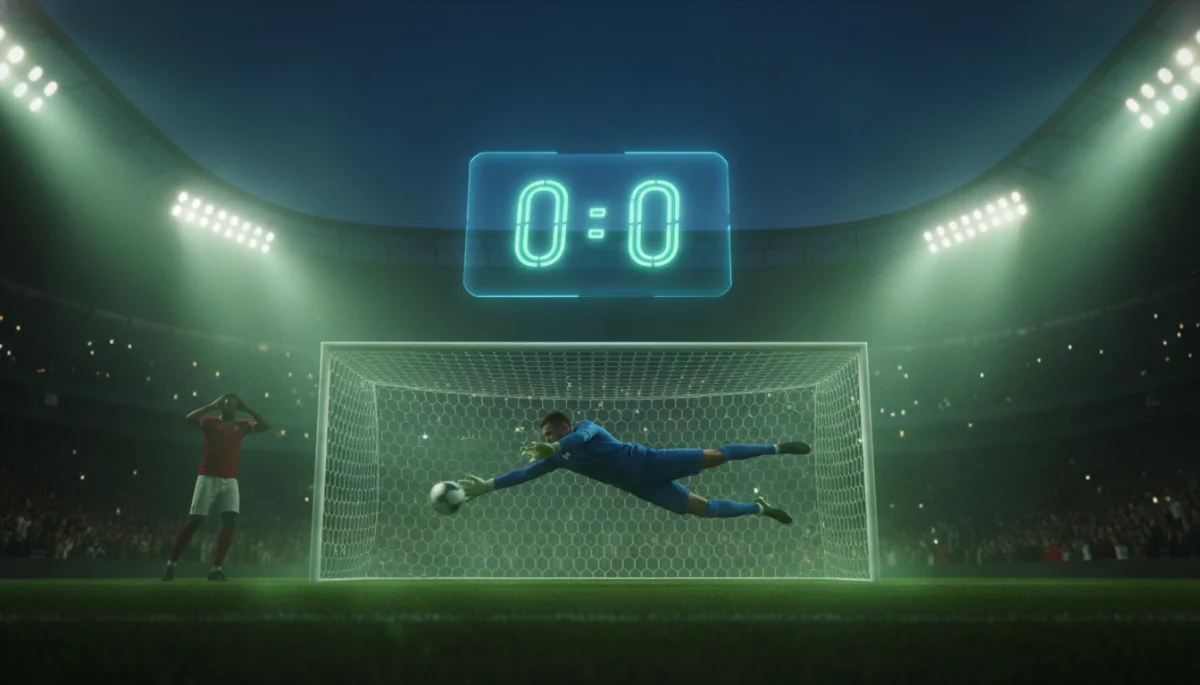
Cape Verde’s first World Cup outing delivered more than survival. Against one of the tournament favorites, the debutants showed structure, nerve, and a level of composure that changed how they will be viewed from this point forward.
Cape Verde’s 0-0 draw with Spain in Atlanta was more than a surprise result. It was a public demonstration that the group’s smallest nation can compete with elite opposition without abandoning its identity.
The scoreboard stayed blank, but the performance was full of meaning. Spain controlled possession and territory, yet Cape Verde absorbed pressure with discipline and left with a point that felt earned rather than accidental.
Why This Result Matters
Spain came in with the superior pedigree, the deeper squad, and the expectation of winning comfortably. Instead, they spent 90 minutes searching for a breakthrough against a team that stayed compact, organized, and unafraid.
The draw also reframes Cape Verde’s place in the tournament. This was not a team stumbling onto a favorable matchup. It was a team that had already proven its quality in qualifying and then carried that belief onto the biggest stage.
The game in numbers
| Category | Spain | Cape Verde |
|---|---|---|
| Shots | 27 | Fewer, but dangerous in transition |
| Shots on target | 7 | Enough to threaten late |
| Expected goals | 2.29 | Low volume, high resistance |
| Result | 0 | 0 |
The Defensive Performance Was the Story
The most important reason Cape Verde survived was their structure. The back line stayed connected, the midfield closed passing lanes, and Spain rarely found a clean route through the center.
That shape held because the players trusted one another. Roberto “Pico” Lopes and Diney Borges were central to that effort, repeatedly stepping in to block runs, clear danger, and prevent Spain from turning half-chances into real openings.
At the back of it all stood Vozinha, who turned 40 only two weeks before the tournament and still played like a man in complete control of the moment. He finished with seven saves and several were critical, especially when Spain tried to force the issue from close range.
What Spain Could Not Solve
Spain moved the ball well enough to look dominant, but possession did not automatically become penetration. The lack of natural width was a major issue, especially with Lamine Yamal starting on the bench and entering only around the 70th minute.
By the time Spain introduced Yamal, Dani Olmo, and Nico Williams, Cape Verde had already settled into the match. Their spacing was disciplined, their reactions were quick, and their confidence never cracked.
- Spain controlled the ball but did not create enough clear chances.
- Cape Verde stayed compact and refused to be pulled out of shape.
- Vozinha delivered the kind of goalkeeping that turns a good point into a historic one.
- Late pressure from Spain still did not break the Blue Sharks.
Proof From Qualifying Was Already There
This result did not appear out of nowhere. Under Pedro “Bubista” Brito, Cape Verde came through African qualifying with seven wins, two draws, and only one loss, finishing four points ahead of Cameroon. They also avoided the intercontinental playoffs, which is a strong sign of consistency rather than a lucky run.
The squad is built around professionals with real competitive experience across Europe and beyond. That mix of organization and familiarity has given Cape Verde a clear identity: defend intelligently, break quickly, and stay calm under pressure.
Dailon Livramento, who helped deliver key goals in qualifying, remains part of the reason this team is dangerous even when it spends long stretches without the ball. Cape Verde do not need to dominate a match to influence it.
What This Says About the Expanded Tournament
Critics have argued that a larger World Cup would dilute the level of competition. Cape Verde’s performance pushed back against that idea in a practical way.
Debutants can still arrive with tactical discipline, competitive maturity, and the confidence to make life miserable for a traditional heavyweight. Cape Verde were not lucky passengers in the event; they looked like a side that belongs in it.
That becomes even more striking when compared with other first-time teams. Some debutants have been overwhelmed, but Cape Verde showed they can protect a result against a European giant and make the match feel theirs.
What Comes Next
The point against Spain is historic, but it does not guarantee anything beyond respect. Cape Verde still face difficult matches ahead, and they will need goals as well as defensive resilience if they want to reach the knockout stage.
Spain will still be expected to finish strongly, especially once their attacking pieces are fully integrated. But the bigger takeaway is now fixed: Cape Verde are not simply here to participate.
They are organized, fearless, and capable of frustrating the highest-level opposition. After this performance, dismissing them as outsiders no longer makes much sense.