
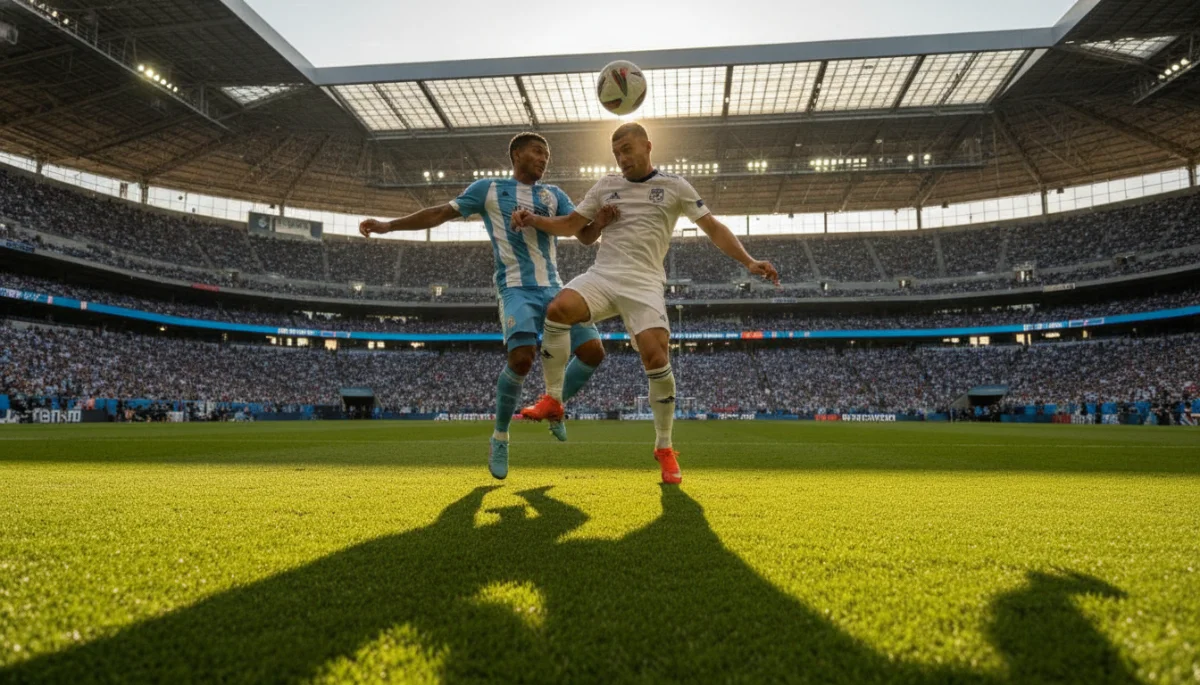
Group J | Monday, June 22, 2026 — 1:00 p.m. ET | AT&T Stadium, Arlington, Texas
Watch live: TSN1, TSN+ (English) | RDS (French)
Argentina and Austria enter this meeting with identical records and very different levels of confidence. Both won on opening day, but Argentina looked like a team defending a crown while Austria looked like a side trying to survive its first test against elite opposition.
This is not just a meeting of two perfect starts. It is a chance to control Group J, put one foot into the knockout rounds, and send a message to the rest of the field. For Argentina, a second straight win would almost certainly confirm first place. For Austria, a result here would be the clearest sign yet that Ralf Rangnick’s rebuild has real World Cup traction.
Argentina arrive with a statement already made
Argentina’s opener against Algeria was about as clean as a title defense can begin. Lionel Messi scored all three goals in a 3-0 win, and the match quickly became less about the scoreline than about the scale of the performance. He not only completed a hat trick, but also moved level with Miroslav Klose at the top of the World Cup scoring chart with 16 goals.
That achievement matters because of what it says about timing and longevity. Messi’s first World Cup goal came 20 years after his tournament debut, and he is still producing decisive moments on the biggest stage. Against Algeria, he was sharp in every phase of the attack, taking shots, creating chances, and repeatedly dragging defenders out of position. Argentina did not need to chase the game, and that was the point: they controlled it from start to finish.
The deeper concern for Argentina’s opponents is that the team around Messi also looked fully synchronized. Lionel Scaloni’s side was compact without the ball, aggressive in the right moments, and calm when possession needed to be recycled. Algeria never found a meaningful foothold, failed to test Argentina’s goalkeeper with a single shot on target, and spent most of the night chasing shadows.
Austria’s opener was a win, but not a clean one
Austria beat Jordan 3-1, yet the scoreboard hid a match that was much tighter than the final numbers suggest. Ralf Rangnick’s team needed patience, substitutions, and a late burst of experience to turn a tricky opener into three points.
Romano Schmid gave Austria the lead with a quality strike from distance in the 20th minute, but Jordan came back early in the second half through Ali Olwan’s curling equalizer. For a while, Austria looked vulnerable to the kind of chaos that tournament football often creates for returning teams. They eventually steadied themselves, though, and Marko Arnautovic changed the game after coming off the bench at halftime.
Arnautovic’s influence was decisive. He forced an own goal from a corner in the 76th minute and then converted a stoppage-time penalty after a VAR handball review. At the same time, the performance raised an important question: was Austria truly comfortable, or simply more experienced in managing pressure than Jordan?
The numbers suggest a mixed answer. Austria did not overwhelm their opponent in volume, and the teams finished level in shots and shots on target. Austria had more of the ball and generated the better expected goals figure, but they were still pushed hard by a debutant side with energy and nothing to lose. That is a warning sign when the next opponent is the reigning champion.
Why Argentina have the sharper edge
The most obvious reason is Messi, who now stands on the brink of another record. One more goal would make him the tournament’s sole all-time scoring leader, and there is no sign that he has stopped seeking these moments. His movement between lines, his finishing, and his control in transition all remain elite.
Argentina’s advantage, however, is not limited to their captain. Lautaro Martínez gives them a direct threat in central areas, while Alexis Mac Allister and Enzo Fernández help link possession with penetration. Rodrigo De Paul remains one of the most useful tournament midfielders because he does the work that makes everyone else look cleaner. He covers ground, supports the press, and helps create the freedom Messi enjoys.
There is also a historical pattern that favors Argentina. Their record against European opponents in World Cup group play has generally been strong, and they have been especially effective when they are allowed to dictate tempo. In that sense, Austria’s aggressive shape may be a gift and a risk at the same time. Press too timidly and Argentina settle in. Press too high and Messi finds the gaps left behind.
Another layer of motivation sits beyond the group table. Argentina are chasing consecutive World Cup titles, a feat accomplished only by Brazil and Italy in the modern era of the competition. That sort of historical possibility tends to sharpen a champion rather than burden it, especially when the team has already shown it can win in multiple ways.
Why Austria cannot be dismissed
Rangnick has built Austria into a recognizable, disciplined team rather than a collection of names. The pressing patterns are clear, the defensive distances are usually compact, and the side is comfortable creating chances from structured restarts and quick recoveries. That identity matters in a tournament where many teams are still searching for one.
Austria’s qualifying form also deserves respect. They were strong across the campaign, protected their own box well for long stretches, and found enough goals to avoid uncomfortable draws. Their recent form overall has been even better, with a long run of wins and very few matches in which they looked second-best for more than a few minutes.
Set pieces could be their best path to damage. Austria have repeatedly shown that they can turn dead-ball situations into scoring chances, and that is especially important against a team like Argentina, which can dominate open play and still concede on a single lapse. If this match becomes a tactical grind, Austria will be far more dangerous than their underdog status suggests.
Marcel Sabitzer will be central if he is fully available and sharp, while Arnautovic remains the kind of experienced forward who can change the mood of a match with one decisive touch. Schmid’s opener against Jordan also showed that Austria have players who can produce from distance when space opens. That gives Rangnick multiple routes to a goal, even if the overall talent gap remains real.
Fitness could decide how brave Austria can be
The biggest uncertainty for Austria is whether some of their key defenders and utility players are ready to handle another intense ninety minutes. David Alaba, Stefan Posch, and Alessandro Schöpf have all had varying fitness concerns, and those issues matter more against Argentina than they did against Jordan.
Posch’s injury situation is particularly notable because it affects Austria’s ability to survive the physical and aerial demands of a match against a team that can attack from multiple zones. Alaba, meanwhile, is the kind of player who changes the tone of a back line simply by being on the field. If either man is limited, Austria lose some of the stability they will need to withstand Argentina’s rhythm.
Rangnick’s tactical idea is built on intensity, but intensity without full defensive availability can turn into vulnerability very quickly. Austria may have to choose between pressing aggressively and protecting the spaces Messi loves to attack. That tradeoff is the central strategic problem of the match.
What the matchup history tells us
This is a rare meeting at senior level, and the lack of shared competitive history means both teams are working almost entirely from scouting and film. There is no meaningful psychological edge from recent meetings, and that makes the opening stages especially important.
Austria have not often been successful against South American opposition, and that trend matters because it suggests they sometimes struggle against the technical variation and improvisation common to teams from the region. Argentina, for their part, do not need old memories to feel confident. They have the better tournament pedigree, the better recent results, and the more reliable match-winners.
Still, unfamiliarity can be useful for the underdog. Austria will believe they can make this awkward, disrupt the first pass out of midfield, and turn the game into a sequence of duels rather than a show of Argentina’s control. If that happens, the contest becomes less about superiority and more about endurance.
How the game is likely to unfold
Argentina should have the cleaner possession patterns and the more dangerous final-third combinations. Austria are likely to press higher than Algeria did, which means the game may begin with more transitions and fewer settled phases than Argentina enjoyed in the opener. That could give Austria a few promising moments, especially if they win restarts or force turnovers in midfield.
Even so, Argentina’s edge in composure is difficult to ignore. They handled their first match like a team with a clear tournament script. They know when to accelerate, when to slow down, and how to absorb pressure without losing their shape. Those qualities often separate champions from challengers in group play.
If Austria score, the most likely route is a set piece or a second-ball moment. If Argentina score first, the shape of the match may quickly favor them because Austria will have to open up more than they would prefer. That is the danger of chasing this Argentina side: once the game stretches, Messi and company become even harder to manage.
Prediction models lean toward Argentina for good reason. The defending champions have more ways to win, more proven control in big matches, and the single most decisive player on the field. Austria are capable of making this uncomfortable, but not necessarily enough to stop the champion’s momentum.
Where to watch in Canada
Canadian viewers can watch live on TSN1 and stream the match through TSN+ beginning at 1:00 p.m. ET. French-language coverage is available on RDS.
The game is being played at AT&T Stadium in Arlington, Texas, one of the largest venues in the tournament. It is part of a busy Group J day that also includes Jordan against Algeria later in the schedule.
Final call
Argentina should control the important stretches of play, and Messi is well positioned to decide another match with a single flash of brilliance. Austria are organized enough to score a goal and stubborn enough to make the champion work, but the defending titleholders still look like the more complete side.
Prediction: Argentina 2-1 Austria
Argentina strike first, Austria respond through a set-piece moment or a scrappy opening, and the match eventually tilts back toward the world champions when their quality in attack proves too strong. A win here would likely send Argentina through to the knockout rounds with a game left to play.