
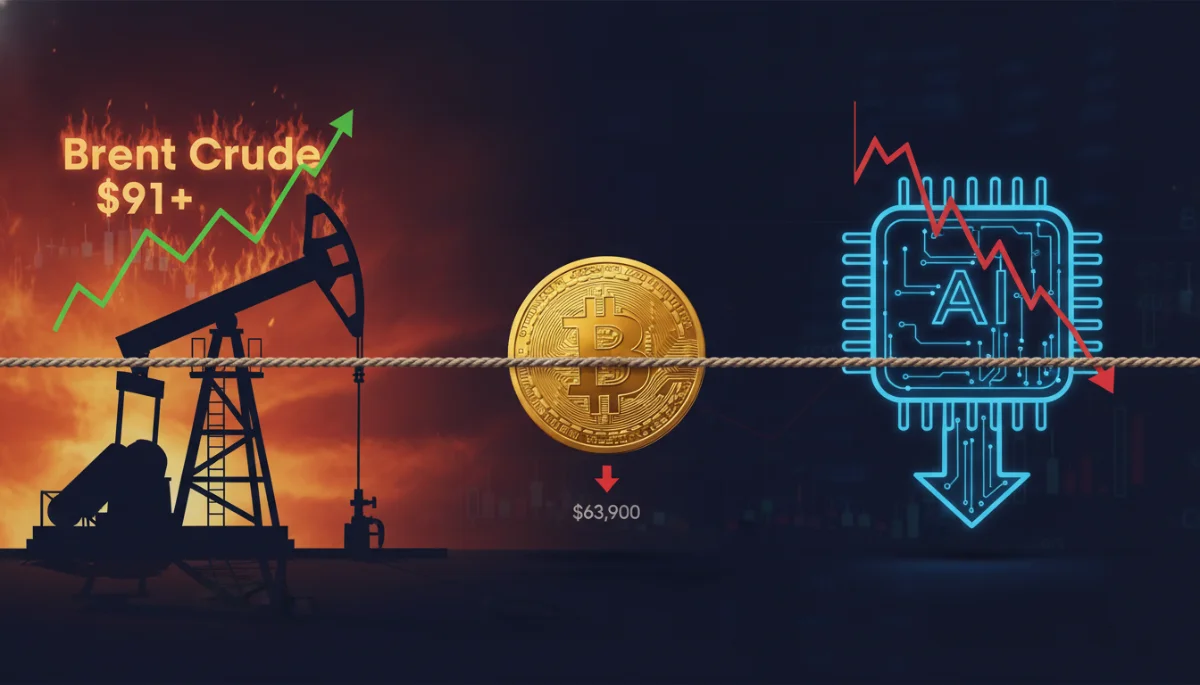
The cryptocurrency market is experiencing a significant correction as Bitcoin dips below the $64,000 threshold, driven by a dual pressure of rising oil prices fueling inflation fears and a historic selloff in the artificial intelligence technology sector. This convergence of macroeconomic headwinds and sector-specific volatility has created a challenging environment for speculative assets, with major cryptocurrencies like Ethereum and Binance Coin also posting losses amid the broader downturn .
Macroeconomic Tensions and Sector-Specific Pressures
The primary catalyst for Bitcoin’s recent decline stems from escalating geopolitical tensions between the United States and Iran, which have triggered a sharp rally in energy markets. Brent crude oil surged past $91 per barrel, reaching its highest level in a month, as military strikes and trade disruptions reignited concerns about a resurgence in global inflation . Historically, rising energy costs act as a direct inflationary lever, prompting investors to anticipate tighter monetary policy from the Federal Reserve. When interest rate expectations rise, the opportunity cost of holding non-yielding speculative assets like cryptocurrency increases, leading capital to flee toward safer, yield-bearing instruments. This macroeconomic shift has directly undermined the risk appetite that previously supported Bitcoin’s valuation, creating a floor that has now cracked under pressure . Parallel to the energy crisis, the technology sector is grappling with a severe contraction driven by disappointing earnings from key artificial intelligence companies, particularly in Asian markets. The sell-off in AI-related stocks, especially among chip manufacturers in South Korea, caused the Kospi index to drop 3.5%, signaling a broader loss of confidence in the tech growth narrative . Because cryptocurrencies are often perceived as high-beta technology assets, the negative sentiment in the AI sector has spilled over into the digital asset market. Investors are increasingly viewing blockchain and crypto as part of the same risk bucket as AI stocks, leading to a synchronized rotation out of these positions. Shaurya Malwa, a Crypto Market Analyst at Bullish Inc., noted that Bitcoin’s dip mirrors a tug-of-war between inflation fears driven by oil prices and the tech sector’s uncertainties, forcing investors to cautiously reposition their portfolios . The interplay between these two forces creates a complex market dynamic where traditional inflation hedges like oil are strengthening while growth-oriented tech assets are collapsing. This divergence leaves cryptocurrencies in a precarious middle ground, lacking the defensive appeal of commodities and the growth potential of the tech sector. The result is a market characterized by heightened volatility and a lack of clear directional momentum, as traders wait for clearer signals on inflation trends and the stability of the AI industry.
Cryptocurrency Performance and Institutional Flows
Bitcoin’s price action on July 20, 2026, reflected this broader market instability, with the token trading at approximately $63,900, down 1.3% over the previous 24 hours . Despite the daily decline, Bitcoin maintained a modest weekly gain of 2.0%, suggesting that the underlying bullish trend has not been entirely erased, though it is currently under significant strain. Ethereum also softened, falling 1.1% to $1,850, while Binance Coin (BNB) and XRP experienced smaller declines of 0.8% and minor fluctuations respectively . Notably, Hyperliquid’s HYPE token emerged as a significant underperformer, suffering an 8.0% weekly loss, which highlights the sector-specific volatility that can exacerbate broader market declines .
| Cryptocurrency | Price (July 20, 2026) | 24h Change | Weekly Change |
| Bitcoin (BTC) | $63,900 | -1.3% | +2.0% |
| Ethereum (ETH) | $1,850 | -1.1% | — |
| Binance Coin (BNB) | $564 | -0.8% | — |
| XRP | $1.09 | – | — |
| Hyperliquid’s HYPE | $60 | — | -8.0% |
Despite the turbulence, institutional interest in Bitcoin has not completely vanished. Bitcoin ETFs have recorded small inflows recently, indicating that some long-term investors view the current price levels as an attractive entry point. However, these inflows remain negligible compared to the substantial outflows witnessed in prior weeks, suggesting that institutional confidence is fragile and cautious . CoinDesk Research described these inflows as “peanuts” relative to the recent exodus, highlighting the fragility of investor sentiment amid ongoing macroeconomic uncertainties . This modest buying activity provides a temporary buffer but is insufficient to override the prevailing downward pressure driven by oil prices and AI sector weakness. The market’s current trajectory suggests that Bitcoin will likely remain range-bound or continue its downward drift until clearer macroeconomic signals emerge. Investors are closely monitoring upcoming inflation data, Federal Reserve meeting outcomes, and the resolution of geopolitical tensions in the Middle East. Any further spikes in oil prices or additional disappointing earnings from AI companies could push Bitcoin below the critical $63,000 support level, potentially triggering further liquidations and a deeper correction. Conversely, a stabilization in oil markets or a recovery in tech stocks could provide the necessary catalyst for a rebound, though such a scenario currently appears unlikely given the prevailing headwinds.
Key Takeaways for Investors Amid Market Volatility
The recent dip in Bitcoin underscores the fragility of the cryptocurrency market’s equilibrium when confronted with conflicting macro influences. The upward pressure from soaring oil prices feeds inflation fears, which dampens risk appetite across all speculative asset classes. Simultaneously, the lingering AI chip selloff weighs heavily on tech-linked assets, creating a dual-bearing pressure on digital currencies. While minor ETF inflows offer a glimmer of hope, they are insufficient to counteract the broader macroeconomic and sector-specific pressures. Investors should remain vigilant and avoid overexposure during this period of heightened volatility. The key to navigating this environment lies in monitoring geopolitical developments, inflation data, and tech sector trends, as these factors will likely dictate crypto market trajectories in the near term. As economist Dr. Linda Chen from the Global Economic Forum noted, inflationary concerns stemming from geopolitical conflicts typically prompt investors to shift away from riskier assets, driving price corrections . In the current landscape, where both energy and technology sectors are under stress, cryptocurrencies face a unique challenge that requires careful risk management and a clear understanding of the underlying market dynamics.