
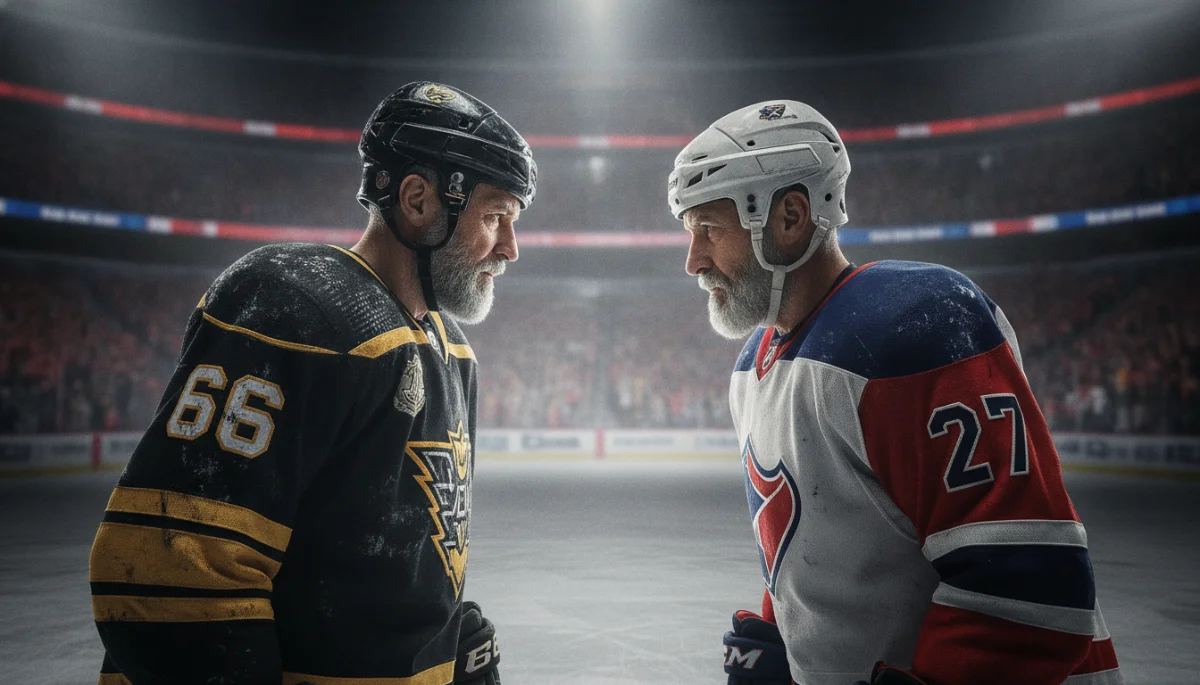
Sidney Crosby and Alex Ovechkin have shared the NHL stage for more than 20 years, but their next meeting carries a significance unlike any previous game. The Pittsburgh Penguins will visit the Washington Capitals on Wednesday night with two legendary captains preparing to face one another again.
Ovechkin announced on October 5 that the 2026-27 season will be his final NHL campaign. At 41 years old and entering his 22nd season, the Washington captain has already scored 929 career goals, the most in league history. Every remaining appearance now feels like part of a farewell tour, and games against Crosby will attract even greater attention.
For fans across North America, especially in Canada, this rivalry has been one of the defining stories of an entire hockey generation. Wednesday’s contest may mark the beginning of its final act.
Why This Penguins-Capitals Meeting Matters More Now
For most of Crosby and Ovechkin’s careers, another opportunity always seemed guaranteed. There would be another regular-season matchup, another playoff race and perhaps another postseason series between Pittsburgh and Washington.
That assumption has disappeared. Ovechkin’s retirement plan gives each remaining meeting a different emotional weight, because the NHL schedule now includes a visible countdown to the end of one of its most recognizable careers.
The two stars entered the league during the same era and quickly became the central figures of a new generation. Their careers included individual records, championship celebrations and years of direct competition. The closing window makes even an early-season game feel historically significant.
Two Superstars Who Took Different Paths to Greatness
Crosby was chosen first overall by Pittsburgh in the 2005 NHL Draft, one year after Washington selected Ovechkin with the top pick. From the beginning, analysts and fans compared them, although their games developed in sharply different directions.
Crosby built his reputation through intelligent playmaking, precise passing, puck control and an ability to dictate possession from the center position. He can influence an attack without registering a goal by winning battles, drawing defenders and creating room for teammates.
Ovechkin became the sport’s most imposing scoring force. His combination of size, speed, strength and a devastating one-timer from the left faceoff circle made him a constant threat. Opponents have known his preferred shooting area for years, yet stopping him there has remained one of hockey’s hardest assignments.
Those contrasting styles turned nearly every Penguins-Capitals game into a debate about what kind of greatness mattered most. Crosby could control the flow of a game, while Ovechkin could change the result with one powerful shot.
Playoff Battles That Shaped NHL History
The rivalry reached its highest intensity in the Stanley Cup Playoffs. Crosby and Ovechkin met in four postseason series, and the winner of every one eventually captured the championship.
- Pittsburgh defeated Washington in 2009, then went on to win the Stanley Cup.
- The Penguins eliminated the Capitals again in 2016 before claiming another championship.
- Pittsburgh repeated the result in 2017 and became Stanley Cup champions once more.
- Washington finally defeated Pittsburgh in 2018, then continued its run toward Ovechkin’s first Stanley Cup.
The individual statistics from those playoff meetings are almost equally balanced. Across 25 postseason games against each other, Ovechkin has recorded 33 points, while Crosby has produced 30.
That narrow difference reflects the competitive nature of the rivalry. Neither player consistently overwhelmed the other, and their teams’ results often depended on which superstar could seize the decisive moment.
The 2009 Game That Captured Their Competition
Game 2 of the 2009 Eastern Conference Semifinals remains one of the clearest examples of their extraordinary rivalry. Crosby and Ovechkin each scored a hat trick in the same contest, producing a dramatic individual duel within an already intense playoff series.
Washington won that game 4-3, but Pittsburgh eventually took the seven-game series and later lifted the Stanley Cup. The result illustrated a pattern that appeared repeatedly: one star would deliver a remarkable performance, and the other would answer with something equally memorable.
What Crosby Represents to Canadian Hockey Fans
Crosby’s importance extends far beyond Pittsburgh. The Nova Scotia native has been one of Canada’s most prominent athletes for more than two decades, and his biggest international moments strengthened that connection.
His overtime goal against the United States in the 2010 Olympic gold medal game in Vancouver remains one of the most celebrated moments in Canadian sports history. That goal made Crosby a symbol of Canadian hockey excellence and gave his rivalry with Ovechkin an international dimension.
Ovechkin represented a powerful Russian hockey tradition and became one of the NHL’s most influential global stars. Their competition began with comparisons between Canada and Russia but grew into a broader contest between two players defining the same era in different ways.
Key Players and Matchup Factors
Sidney Crosby’s Possession Game
Crosby remains Pittsburgh’s central option when the game becomes tight. His low-center-of-gravity strength helps him protect the puck near the crease, while his awareness allows him to spot teammates in crowded areas.
Through his first 74 regular-season meetings with Washington, Crosby had collected 97 points, including 35 goals and 62 assists. If the Penguins spend extended shifts in the Capitals’ defensive zone, his ability to maintain possession and create second chances could become crucial.
His influence may not always appear on the scoresheet immediately. Crosby can tilt the ice by winning a faceoff, extending a cycle or forcing defenders to collapse before delivering a pass to an open teammate.
Ovechkin’s One-Shot Threat
Ovechkin presents a different challenge. Washington does not need to dominate every shift for him to become decisive; a single clean opportunity can alter the score.
The Capitals will look for ways to move the puck into his preferred shooting lanes, especially during power-play situations. His release remains dangerous because defenders must respect both his shot and the physical pressure he brings along the boards and around the net.
With his retirement now scheduled after the 2026-27 season, every home appearance also carries an emotional layer. The crowd, his teammates and the opponent all understand that the number of opportunities left to watch him compete is shrinking.
What to Watch When the Game Begins
- Whether Pittsburgh can maintain possession long enough for Crosby to create repeated chances.
- Whether Washington can generate power-play opportunities for Ovechkin’s signature shot.
- Which captain makes the first major play in a close game.
- How the atmosphere in Washington changes as fans recognize the historical importance of the matchup.
An open game could give both stars room to influence the action. Crosby is capable of affecting every phase of Pittsburgh’s offense, while Ovechkin remains the more direct finishing threat.
The matchup may ultimately come down to control versus explosiveness. Crosby could manage long stretches through possession and distribution, but Ovechkin may require only one unguarded shooting chance to decide the outcome.
A Final Opportunity to See an Era in Motion
The league will continue producing elite players after Crosby and Ovechkin retire. Connor McDavid, Nathan MacKinnon and the next wave of NHL stars are already carrying the sport forward.
Still, reproducing this rivalry will be extremely difficult. Crosby and Ovechkin entered the league within a year of each other, became superstars almost immediately and remained connected through regular-season contests, playoff drama, international expectations and championship races.
Their importance is not limited to statistics. They made ordinary games feel meaningful because viewers knew they were watching two historic players compete in real time. Their rivalry survived changes in teammates, coaches, playing styles and league eras.
Wednesday night’s matchup will still count as one game in the standings, but its lasting value may come from what it represents. The end of the Crosby-Ovechkin era is no longer a distant possibility. The countdown has begun, making every remaining meeting a chance to witness hockey history before it becomes memory.