
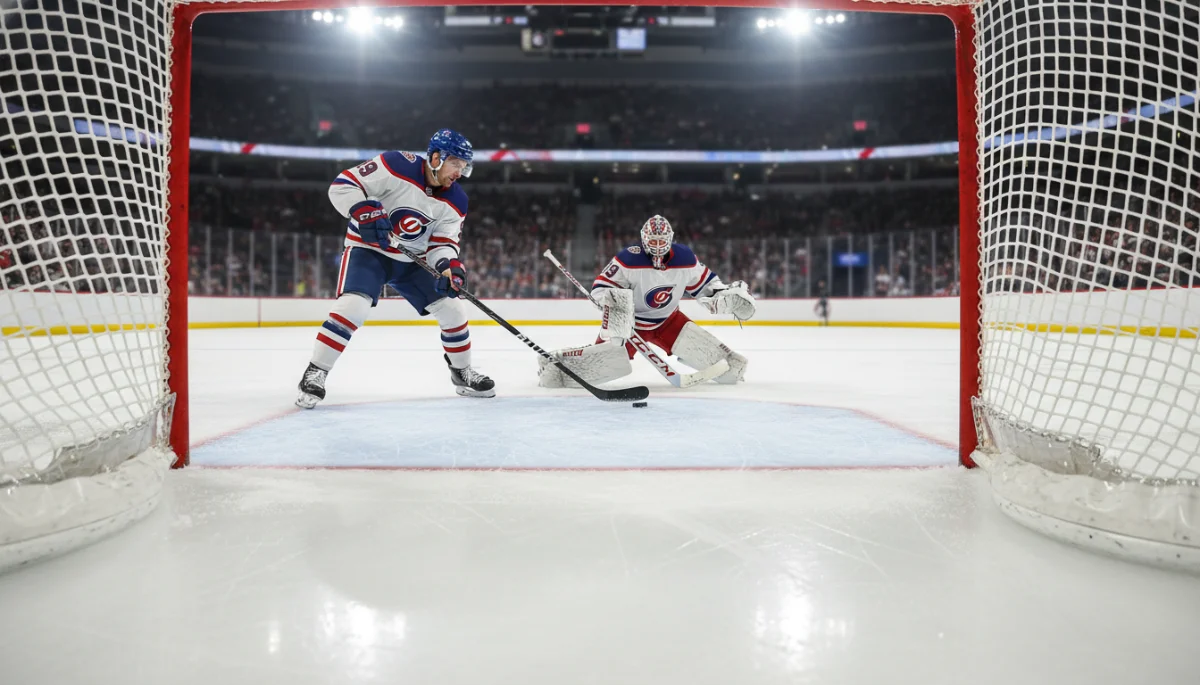
The Carolina Hurricanes entered Game 1 with the look of a team that had not only survived the first two rounds, but mastered them. Their 8-0 playoff start had made them the standard for structure, pace, and discipline. Then the Montreal Canadiens arrived in Raleigh after two punishing Game 7 wins and rewrote the script in the opening period alone. What looked like a mismatch on paper turned into a 6-2 Canadiens victory that exposed how quickly momentum can flip when a rested favourite is forced to deal with a fearless opponent.
This was not a slow-building upset. Montreal struck with pace, confidence, and a level of execution that made Carolina’s long layoff look like a liability rather than a reward. The game became a reminder that in the playoffs, reputation matters far less than the first team to win the battle for ice, time, and space.
The opening minutes changed everything
Carolina got the exact start it wanted. Just 33 seconds in, Seth Jarvis opened the scoring and pushed the crowd into the game immediately. For most teams, a road response after an emotional finish to the previous series would be difficult. For Montreal, it seemed to spark a sharper edge.
The Canadiens answered with remarkable poise. Cole Caufield tied the game quickly, using his quick release and timing to punish a brief defensive lapse. Not long after, Phillip Danault turned a clean transition play into a breakaway finish, giving Montreal its first lead and draining the energy out of the building.
From there, the game tilted hard and fast. Alexandre Texier extended the advantage, and Ivan Demidov added the kind of goal that showed why Montreal’s young forwards have become such a dangerous part of this playoff run. By the middle of the period, the Canadiens had turned one early deficit into a 4-1 cushion, and Carolina suddenly looked shocked by the speed of the response.
First-period scoring sequence
- 00:33 — Seth Jarvis gave Carolina a 1-0 lead.
- About 03:00 — Cole Caufield tied it for Montreal.
- 04:00 — Phillip Danault scored to make it 2-1 Canadiens.
- 08:00 — Alexandre Texier pushed the lead to 3-1.
- 11:32 — Ivan Demidov finished the period’s signature rush to make it 4-1.
Why Montreal’s plan worked so well
The result was not just about hot shooting or one strange period. Montreal had a clear tactical answer for Carolina’s pressure game. The Hurricanes wanted to force mistakes deep in the offensive zone, keep pucks alive along the boards, and wear opponents down through repeated shifts of pressure. That approach had been overwhelming everyone else in the playoffs.
The Canadiens refused to meet that pressure head-on. Instead, they moved the puck quickly through the middle of the ice, used short support passes to escape danger, and attacked the gaps left behind by Carolina’s aggressive defenders. Once the first layer of pressure was broken, Montreal found open lanes that created clean exits and dangerous rush chances.
That was the key detail. Carolina’s style depends on controlling the chaos. Montreal created the kind of controlled counterattack that can punish even the best forecheck. Every clean breakout forced the Hurricanes to turn and chase, and that is exactly the kind of shift they hate to play.
What Carolina could not contain
- Quick puck movement out of pressure
- Support through the middle lane
- Odd-man rushes created by aggressive pinches
- Breakaways after turnovers in transition
- Montreal’s confidence after each successful exit
Goaltending told the story too
Before this game, Frederik Andersen had been building one of the strongest playoff profiles in the league. His numbers were outstanding, and Carolina’s defensive record had been backed by his consistency. Game 1 was different. Montreal’s speed and precision left him exposed more than once, and the Canadiens made him pay for every breakdown in front of him.
Andersen was not the only one under pressure, but he was the one left to absorb the damage. Carolina gave up direct rushes, conceded quality looks off the rush, and failed to protect the high-danger areas with enough urgency. By the time the Canadiens were done, Andersen had allowed five goals on 21 shots, which was a startling turnaround for a goaltender who had looked nearly unbreakable.
At the other end, Jakub Dobes settled in after the opening goal and gave Montreal the kind of calm response the team needed. He finished with 24 saves on 26 shots and handled Carolina’s push without letting the game get back within reach. Once the Canadiens built the cushion, Dobes made sure it stayed intact.
Montreal closed with authority
Carolina tried to make the game respectable, and Eric Robinson eventually got one back for the home side. But by then, Montreal had already established control of the night. Juraj Slafkovsky added two more goals in the third period, including an empty-netter, to seal the result and turn a strong lead into a lopsided finish.
Nick Suzuki also delivered an excellent all-around performance, quietly piling up three assists and steering the offence with calm, efficient play. He did not need to dominate the spotlight to dominate the flow of the game. His line managed the puck, found seams, and kept pressure on Carolina every time the Hurricanes attempted to settle in.
What this means going forward
Montreal’s win does not mean the series is over, but it does change the tone immediately. A team that had been praised for its structure and poise now has to answer uncomfortable questions about rhythm, readiness, and whether the layoff worked against it. Carolina will adjust, and it will almost certainly look cleaner in Game 2.
Still, there is no ignoring the significance of what happened. The Canadiens did not sneak through this opener. They attacked it, controlled it, and proved they can create real problems for a favourite that had appeared nearly unbeatable. That is what makes this result so important: Montreal showed that its run is built on more than survival. It is built on a style that can beat anyone when the execution is sharp.
For Carolina, the challenge now is simple but severe: reset quickly, recover its structure, and rediscover the level that produced an 8-0 start. For Montreal, the mission is to keep the same pace, the same confidence, and the same willingness to punish every mistake. If Game 1 was the warning shot, the rest of the series could become a much longer, more uncomfortable problem for the Hurricanes.