
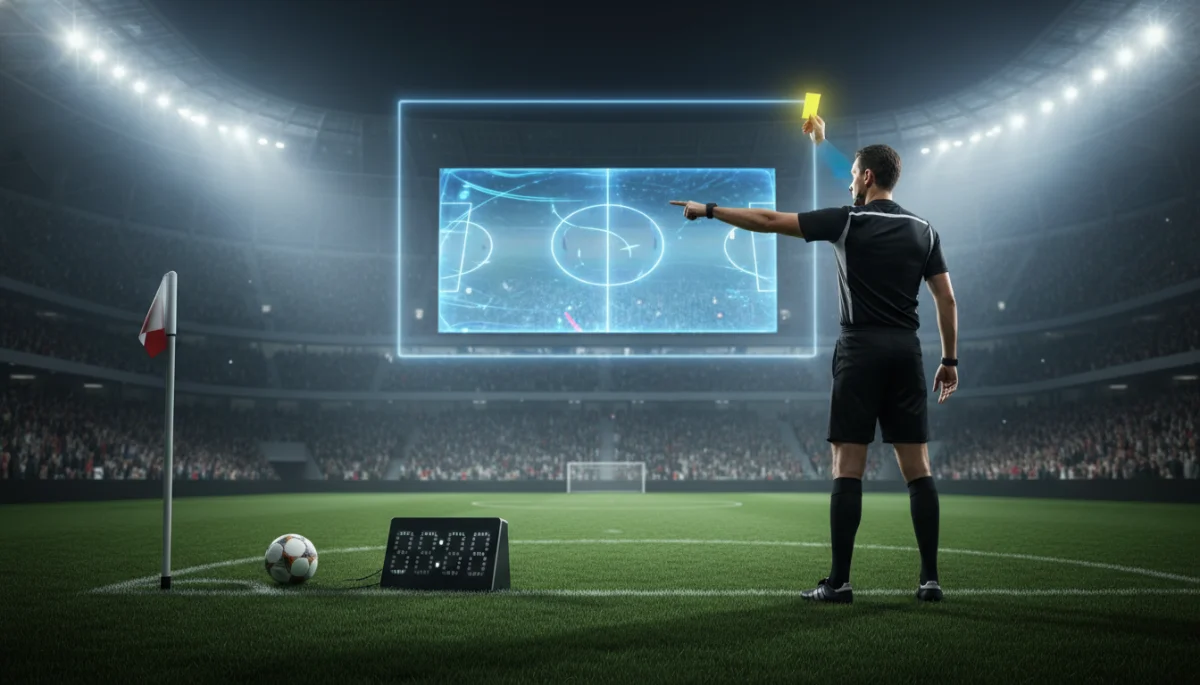
The 2026 FIFA World Cup will bring more than a larger field and a wider stage. It will also feature a series of law changes that could reshape how matches are managed from the first whistle to the last.
These updates are aimed at cutting delays, limiting gamesmanship, improving discipline, and giving officials clearer tools in tense moments. For players and coaches, the adjustment period may be short. For fans, the match flow may feel noticeably different.
Why the Rules Are Changing
Football’s lawmakers want a faster and cleaner game. The new measures are designed to reduce stalling, make officiating more consistent, and discourage behavior that undermines the contest.
The tournament is likely to be one of the first major global events where several of these changes appear together, so the World Cup will serve as a major test case.
1. New Punishments for Concealed Confrontations
One of the most eye-catching changes targets players who cover their mouths during heated exchanges. If a player hides their mouth with a hand, shirt, or arm in a confrontational moment, referees may treat it as a red-card offense.
The goal is to make it harder for players to conceal abusive or discriminatory language during conflicts.
When the Rule Applies
This is not meant for harmless chats or routine attempts to block cameras. It is aimed at disputes, suspicious exchanges, and moments where officials believe language may be deliberately hidden from view.
Why It Matters
Referees have often had limited options when a player appears to use concealment during an argument. This rule gives them a direct way to respond to behavior that may be intended to mask offensive comments.
2. Walk-Off Protests Can Bring Stronger Discipline
Players or teams that leave the field in protest may face immediate consequences. A player who walks off as part of a protest can be shown a red card, and team staff who encourage the move may also be punished.
If the protest leads to a match being abandoned, the team may even be handed a forfeit loss.
What This Means in Practice
The message is simple: using a walk-off as pressure during a disputed call will carry much more risk than before. Officials are being given clearer backing to keep matches on the field and under control.
3. Visible Countdowns for Slow Restarts
Time-wasting at restarts has been a common complaint, and the World Cup will use stricter timing at certain moments. Referees will signal a visible five-second countdown for some restarts, giving teams a clear limit.
If the team in possession does not restart in time, the restart can be taken away and awarded to the opposition.
Throw-Ins
If a throw-in is delayed beyond the count, the other team gets the throw. That creates a real penalty for teams that try to manage the clock too aggressively.
Goal Kicks
If a goal kick is not taken in time, the opposing side can be awarded a corner. That is a major swing and should push goalkeepers and defenders to act faster.
4. Faster Substitution Procedures
Substitution management is also getting tighter. Once the board goes up, the player leaving the field will have only 10 seconds to exit, and they are expected to leave by the nearest boundary point.
This is meant to stop slow walks across the pitch that eat up valuable time.
- The substitution is signaled.
- The departing player must leave quickly.
- The player should exit at the nearest touchline or end line point.
- If the player delays, the restart process can be affected.
There are still common-sense exceptions. Injuries, safety concerns, and security issues can justify extra time. Routine delay, however, is likely to be treated more firmly.
5. Medical Breaks Will No Longer Be Easy Tactical Pauses
When medical staff enter the field to treat an outfield player, that player will usually have to leave for one minute after play resumes. The purpose is to stop teams from using minor treatment as a disguised delay tactic.
This rule is meant to keep matches moving while still allowing proper medical care.
Key Exceptions
The one-minute leave will not always apply. Goalkeeper injuries, collisions involving a goalkeeper and an outfield player, teammate-to-teammate collisions, serious injuries such as concussion concerns, and situations involving a player about to take a penalty are among the main exceptions.
6. VAR Will Reach a Few More Situations
Video review is expected to have a broader role in 2026, although not every disputed moment will be eligible. The aim is to correct obvious errors without turning the match into a long review session.
Second Yellow Mistakes
VAR may step in if a player is sent off because of a second yellow card that is clearly wrong. That is an important expansion because second-yellow decisions have often been outside review limits.
Wrong Player Sanctioned
If the referee cautions or dismisses the wrong player, VAR can help fix the mistake. That should reduce the chance of a player being punished for someone else’s foul.
Some Corner Kick Errors
In limited cases, VAR may also correct an obvious wrong corner decision if the issue can be handled quickly. This is expected to remain narrow, not routine.
Fouls Before a Set Piece
If an attacking player commits a foul before a free kick or corner is taken, VAR may recommend an on-field review. That could affect blocking, holding, and other physical actions that happen before the ball is in play.
7. Hydration Stops in Every Match
Because the tournament will be played across the United States, Mexico, and Canada, warm conditions are likely in several venues. Every match will therefore include hydration breaks.
Each half is expected to include a three-minute pause around the midpoint, often near the 22nd minute. Referees will still have some flexibility and can shift the timing if another stoppage, such as treatment, makes better sense.
8. No Free Coaching During Goalkeeper Treatment
Goalkeeper injuries can sometimes create an unofficial chance for teams to regroup and receive instructions. The updated rules are meant to prevent that.
If a goalkeeper is being treated on the field, teams should not use the stoppage as a tactical timeout with the coaching staff. The aim is to separate medical care from competitive delay.
How Teams May Need to Adjust
These changes may look small in isolation, but together they could have a real impact on match management. A slow restart may cost possession. A late substitution may leave a side short for a moment. A heated exchange may now carry a harsher penalty.
Coaches will likely spend time drilling players on pace, discipline, and communication before the tournament begins.
- Players will need to restart play faster.
- Bench staff will need to handle substitutions more efficiently.
- Teams will need to avoid protest behavior that can trigger cards or forfeits.
- Set-piece routines may need cleaner timing and less obvious contact.
What Fans Will Notice Most
Supporters should expect more visible referee control around restarts, more precise substitution timing, and a stronger role for VAR in certain narrow cases. Some of these calls may feel unfamiliar at first because they will be enforced more quickly and more openly.
The overall aim is a match that spends more time in active play and less time in avoidable stoppages.
The Bottom Line for 2026
The World Cup’s updated laws are built around speed, discipline, and cleaner decision-making. They will not change the sport’s core identity, but they could change how closely every second is managed.
Teams that adapt early may gain a real edge. Teams that keep relying on delay, dissent, or old habits may find the new rules working against them.