
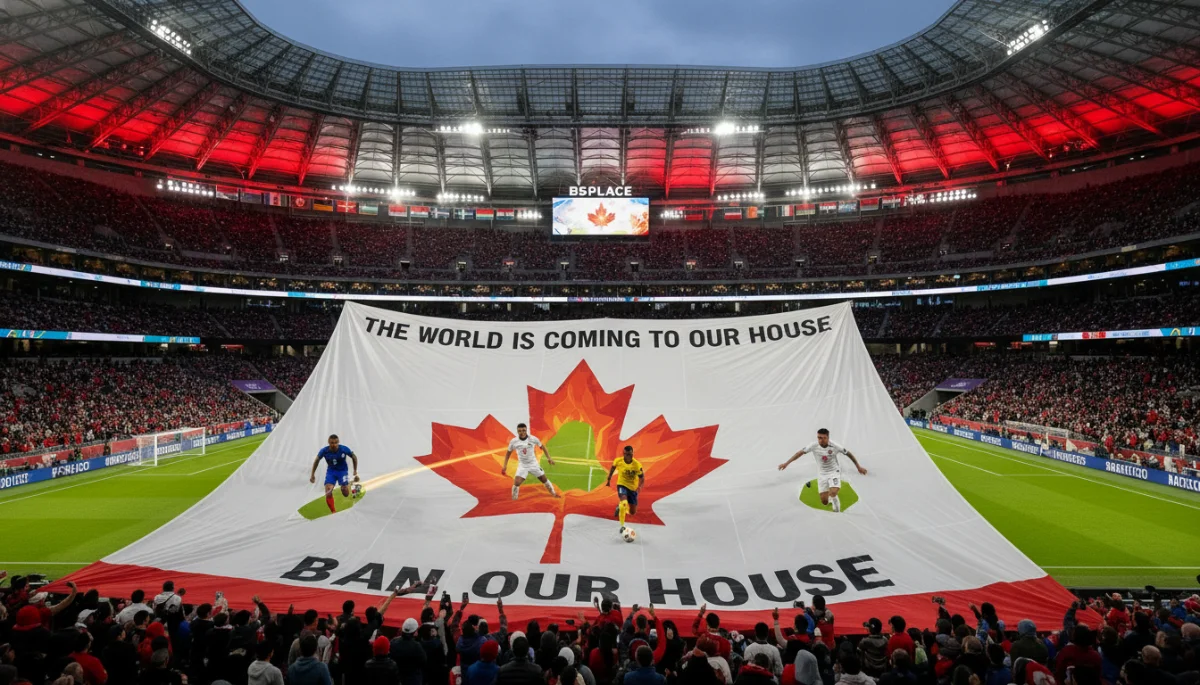
The 2026 FIFA World Cup will feel bigger than any edition before it, and the expanded field makes the path to the trophy even more demanding. With Canada, Mexico, and the United States sharing hosting duties, the tournament will unfold in front of enormous crowds, long travel stretches, and nonstop pressure.
For Canadian supporters, the emotional center of the event will be the hope that the home side can make noise in front of packed stadiums in Toronto and Vancouver. Even so, the wider conversation will revolve around the global powers expected to arrive with deeper rosters, sharper systems, and far more tournament experience.
Here is a clear-eyed look at the ten national teams most likely to shape the title race.
The front-runners
France sits near the top of almost every serious conversation because of its combination of elite depth and match-winners. Kylian Mbappé remains the headline threat, but the bigger story is how complete the squad looks in every phase of the game. The French can attack at speed, defend with authority, and rotate without losing much quality, which is exactly what a long World Cup rewards.
Brazil remains one of the tournament’s most dangerous names, even after a long wait for another title. Their appeal starts with the creativity of players such as Vinícius Júnior and Rodrygo, but it does not end there. This version of Brazil has often looked more balanced than older, more flamboyant editions, blending skill with structure in a way that can travel well across a demanding tournament.
England belongs in the top tier because the roster is stacked with players who are already proven at the highest club and international levels. Jude Bellingham gives the midfield a forceful, modern edge, while Harry Kane supplies calm finishing and veteran authority. The question is rarely talent with England; it is whether the group can turn expectation into steady knockout-stage progress.
Argentina enters as the defending champion and still carries the edge that has defined its recent rise. Lionel Messi may no longer be asked to do everything, but his influence will still matter, especially in tight moments. Around him, players like Julián Álvarez and Alexis Mac Allister give Argentina enough energy, intelligence, and bite to stay dangerous against anyone.
Teams that can go deep
Spain has quietly built a team that looks far more threatening than the possession-heavy sides many fans remember from the past. Lamine Yamal gives the attack a burst of imagination and pace that changes how opponents must defend, and the rest of the group has enough technical control to dictate matches. If the young core handles the physical grind, Spain has the profile of a true contender.
Germany is another team whose reputation should never be ignored. Recent tournament disappointments pushed the program into a reset, and the new version appears more balanced, more disciplined, and more flexible. Germany usually thrives when structure matters most, and a World Cup in North America gives them a setting where organization and efficiency can matter just as much as flair.
Portugal has evolved into something far more dangerous than a side built around one iconic star. With Rafael Leão, Bruno Fernandes, and Bernardo Silva offering different attacking strengths, the team can hurt opponents in multiple ways. If the pressing is consistent and the rotations are managed well, Portugal has enough quality to make life miserable for elite opponents in the knockout rounds.
Italy remains one of the toughest teams to judge because the name still carries enormous tournament weight even after painful absences. The Azzurri have rebuilt around defensive discipline, compact spacing, and a workmanlike midfield that knows how to suffocate rhythm. That formula may not always be flashy, but it can absolutely succeed in a month-long event where one mistake can end a favorite’s run.
The dangerous outsiders
The Netherlands often gets labeled as a team that should do more than it historically has, but the current group has enough steel to be taken seriously. Virgil van Dijk anchors a defense that is difficult to break apart, and the side’s physical profile makes it a difficult matchup in any round. If the finishing improves, the Oranje can turn from a nuisance into a genuine bracket problem for everyone else.
Uruguay is the sort of team no top seed wants to see in the draw. Marcelo Bielsa has brought a fierce, high-pressing identity that demands constant intensity, and Darwin Núñez gives the attack a relentless edge. Uruguay may not be the most polished team in the field, but it can overwhelm opponents through pace, aggression, and pure volume of effort.
- France remains the most complete blend of depth, speed, and big-stage experience.
- Brazil can combine attacking flair with a sturdier, more practical tournament identity.
- England has the talent to control games and the burden of proving it under pressure.
- Argentina still knows how to win, even while moving into a new phase around Messi.
- Spain brings youth, control, and enough creativity to punish slow defenses.
- Germany offers structure, discipline, and the habit of peaking when tournaments tighten.
- Portugal can score from multiple zones and punish teams that lose concentration.
- Italy is built for patience, frustration, and the kind of narrow wins that define March-to-July football.
- The Netherlands has the defensive backbone to stay alive deep into the knockout bracket.
- Uruguay brings chaos, intensity, and a style that can rattle far more talented opponents.
Canada’s best hope is that a home crowd changes the mood of matches in ways that are hard to measure on paper. Alphonso Davies gives the team a genuine world-class threat, and the energy of playing in familiar stadiums could help narrow the gap against stronger opponents. Even if a deep run remains difficult, the home environment gives the Canadian side a real chance to surprise someone.
That is what makes this World Cup especially compelling: the favorites look strong, but the travel, the scale, and the expanded format all create room for disruption. The title race should be crowded from the start, and by the time the bracket tightens, at least one of these ten teams will probably look far more vulnerable than expected.